
The recent studies and research on the Trick of the Egyptians reveal significant advancements in ancient Egyptian practices, including innovative construction techniques, advanced agricultural methods, and artistic expressions. These findings are reshaping Egyptology, highlighting the role of technology in archaeology, and emphasizing the need for interdisciplinary approaches in future research.
The Trick of the Egyptians has intrigued scholars and enthusiasts alike as recent studies and research continue to unveil secrets of ancient civilization. With groundbreaking discoveries shedding light on innovative practices, we are uncovering techniques that have shaped historical narratives. In this article, we will explore recent findings in Egyptian practices, their impact on Egyptology, and what lies ahead for future research in this fascinating field.
Recent Discoveries in Egyptian Practices
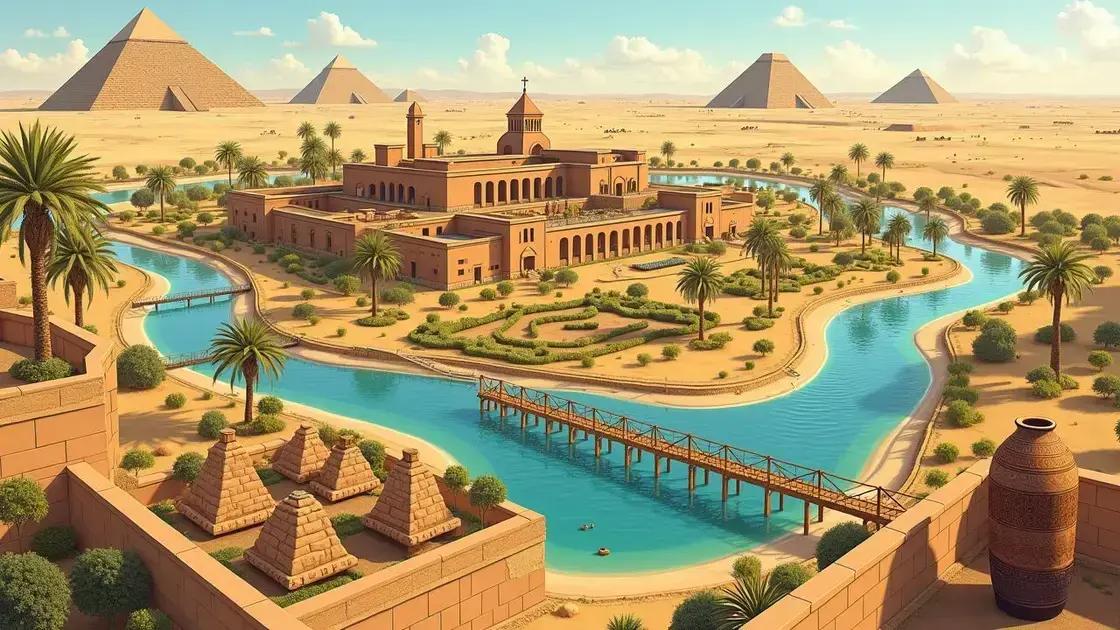
Recent discoveries in Egyptian practices shed light on the innovative techniques used by ancient Egyptians. Archaeologists and researchers have uncovered evidence of advanced methods in construction, agriculture, and art that were previously unknown. These findings challenge our understanding of how the ancient civilization thrived for thousands of years.
Innovative Construction Techniques
Among the most exciting recent discoveries is the method of using mudbrick in construction. Researchers have found large-scale mudbrick factories near ancient sites, which suggests Egyptians had sophisticated production methods. These bricks, made from natural resources, were durable and provided excellent insulation, showcasing the Egyptians’ understanding of materials.
Advanced Agricultural Practices
In agriculture, discoveries reveal that the ancient Egyptians practiced sophisticated irrigation systems. Recent studies show that they utilized the annual flooding of the Nile River to fertilize their fields. This knowledge of seasonal changes allowed them to maximize crop yields, ensuring food security for their civilization.
Artistry in Daily Life
Additionally, recent excavations have revealed the intricacies of everyday art, from pottery to textiles, which demonstrate a high level of craftsmanship. Artifacts found exhibit detailed patterns and techniques that reflect a culture deeply invested in both utility and aesthetics. These discoveries not only highlight the artistic skills of the Egyptians but also their ability to express their culture through daily items.
In summary, the recent discoveries in Egyptian practices illustrate a sophisticated society with innovative solutions in construction, agriculture, and art that laid the groundwork for future civilizations.
Impact of Recent Research on Egyptology
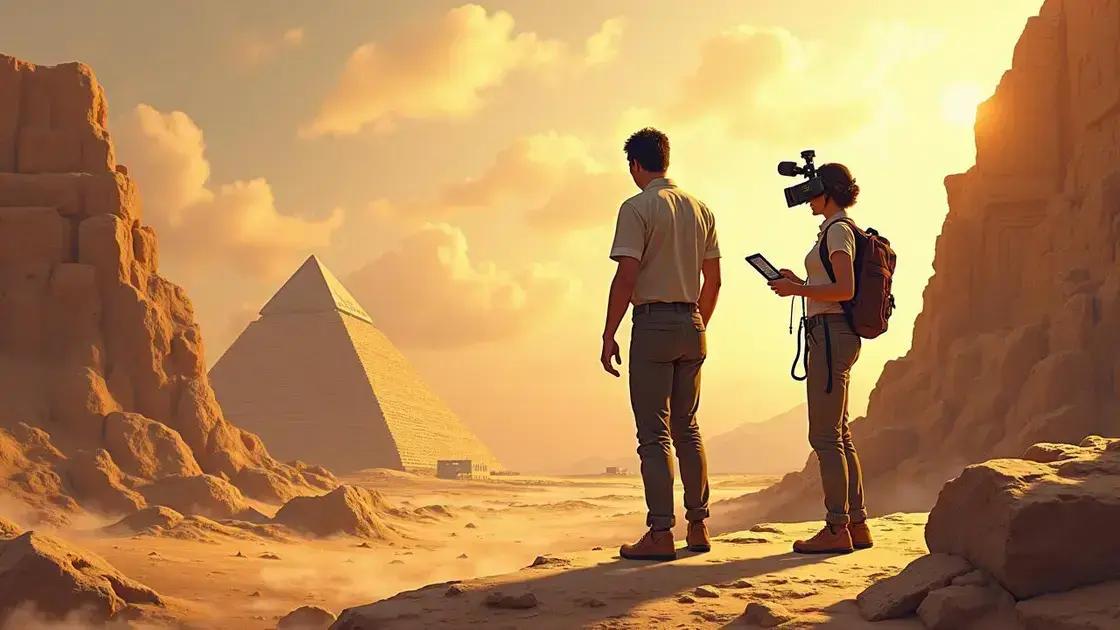
The impact of recent research on Egyptology has been significant in reshaping our understanding of ancient Egyptian civilization. Scholars are now able to reinterpret artifacts and texts that shed light on everyday life, belief systems, and historical events.
Reevaluation of Historical Events
Recent discoveries have challenged long-held beliefs about key historical events, allowing researchers to revise timelines and narratives. For instance, new archaeological findings around burial sites have provided fresh insights into the lives of pharaohs and how they were honored after death.
Advancements in Technology and Methodology
Technological advances, such as ground-penetrating radar and digital imaging, enable Egyptologists to explore sites more efficiently. These tools allow scholars to uncover structures buried beneath the sand without extensive excavation, reducing damage to sensitive artifacts.
Collaboration Across Disciplines
Moreover, interdisciplinary collaborations are now more common, blending techniques from archaeology, anthropology, and even environmental science. This holistic approach leads to a deeper understanding of how ancient Egyptians adapted to their environment and how their culture evolved over time.
The combination of these elements contributes to a richer narrative and a more comprehensive appreciation of Egyptology as a field. By integrating modern findings with traditional studies, researchers can formulate a more complete picture of this fascinating civilization.
Future Directions in Egyptian Studies
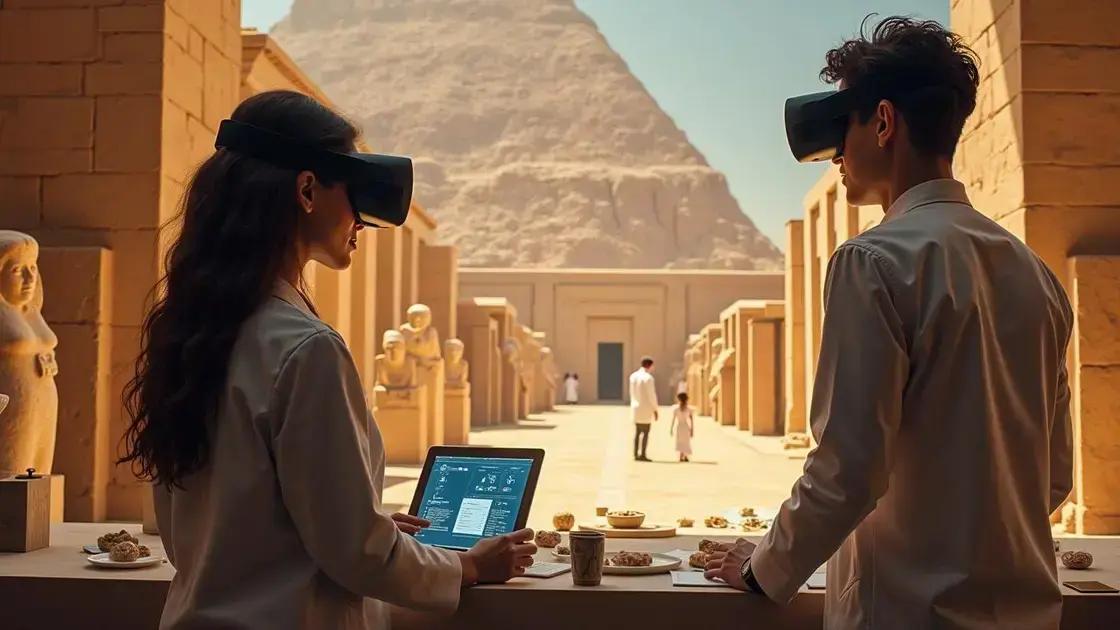
Future directions in Egyptian studies promise exciting opportunities for deeper understanding and discoveries. As technology continues to advance, it opens new possibilities for archaeologists and scholars.
Integration of Artificial Intelligence
Artificial Intelligence (AI) is set to play a pivotal role in analyzing vast amounts of data collected from archaeological sites. Researchers can utilize machine learning algorithms to identify patterns and make connections between different artifacts, leading to groundbreaking insights.
Focus on Interdisciplinary Research
Future studies will likely prioritize interdisciplinary research that combines Egyptology with other fields. By working together with historians, environmental scientists, and geneticists, Egyptologists can gain a comprehensive perspective on how ancient Egyptians lived, adapted, and thrived in their environment.
Public Engagement and Education
Moreover, engaging the public through virtual reality (VR) experiences and interactive exhibitions will enhance appreciation of ancient Egyptian culture. By making research more accessible, we can inspire the next generation of Egyptologists.
The collaboration of innovative technologies, interdisciplinary approaches, and public engagement will shape the future of Egyptian studies. These directions promise to unravel more secrets of this magnificent civilization and deepen our comprehension of its historical significance.
In Summary: Unlocking the Secrets of Ancient Egypt
The exploration of the Trick of the Egyptians reveals a civilization rich in innovation and creativity. Recent studies and research have uncovered groundbreaking discoveries in Egyptian practices, offering fresh perspectives on their advanced techniques in construction, agriculture, and art.
The impact of new research on Egyptology has enabled scholars to reevaluate historical narratives and embraced modern technology for deeper insights. As we look ahead, the future directions in Egyptian studies highlight the significance of interdisciplinary collaboration and public engagement.
By leveraging technological advancements and fostering a greater appreciation of ancient culture, we can continue to unlock the mysteries and marvel at the achievements of the ancient Egyptians.
FAQ – Frequently Asked Questions About Egyptian Studies
What are some recent discoveries in Egyptian practices?
Recent discoveries include advanced construction techniques using mudbrick, sophisticated irrigation systems for agriculture, and intricate everyday art.
How has recent research impacted the field of Egyptology?
Recent research has led to a reevaluation of historical events and the integration of technology, enhancing our understanding of ancient Egyptian civilization.
What role does technology play in current Egyptian studies?
Technology, such as artificial intelligence and ground-penetrating radar, allows for efficient data analysis and exploration of archaeological sites without significant excavation.
Why is interdisciplinary research important in Egyptian studies?
Interdisciplinary research combines various fields, providing a comprehensive perspective and deeper insights into how ancient Egyptians lived and adapted to their environment.
How can the public engage with Egyptian studies?
Public engagement can be enhanced through virtual reality experiences, interactive exhibitions, and educational programs that promote appreciation for ancient Egyptian culture.
What are the future directions in Egyptian studies?
Future directions include the integration of AI, a focus on interdisciplinary collaboration, and efforts to make research more accessible and engaging for the public.